Ross Nussle
September 19, 2026
What a Fast Close Hides
What I look for when an investor sends me a property that's already been called a bargain
Off-market and wholesale deals move fast, and speed is the whole product. You're buying the discount that comes with a seller who wants out, a house that never hit the MLS, and a contract that closes in a week. That math works right up until the house has a problem the discount didn't cover.
I inspect a lot of these. Some are good deals. The ones that go sideways almost always show the same warning signs on the front end, and most of them are visible before you ever sign.
Here are the five that cost investors the most money...
1. The utilities are off, and nobody will turn them on
This is the most common one and the most expensive one, because it doesn't look like a problem. It looks like a vacant house.
But an inspection on a house with no power, no water and no gas isn't a cheaper inspection. It's an incomplete one. I can't test the furnace or the condenser. I can't check for leaks under the sinks or at the water heater. I can't run the dishwasher, verify the disposal, test a single GFCI, or tell you whether the sewer line drains at all. Every one of those systems goes into the report as a limitation.
You are not buying a house with a clean inspection. You're buying a house with an unknown HVAC system, unknown plumbing and unknown electrical, and those three are where the five-figure surprises live.
If the seller or the wholesaler won't get utilities on, ask why. Sometimes the answer is genuinely that the meter was pulled years ago. Sometimes the answer is that the last time the water was on, it didn't stay in the pipes. Either way, price the deal as though those systems are failed, because functionally you don't know that they aren't.
2. Fresh finishes in exactly the wrong places
New paint in a vacant house is normal. New paint on one ceiling is information.
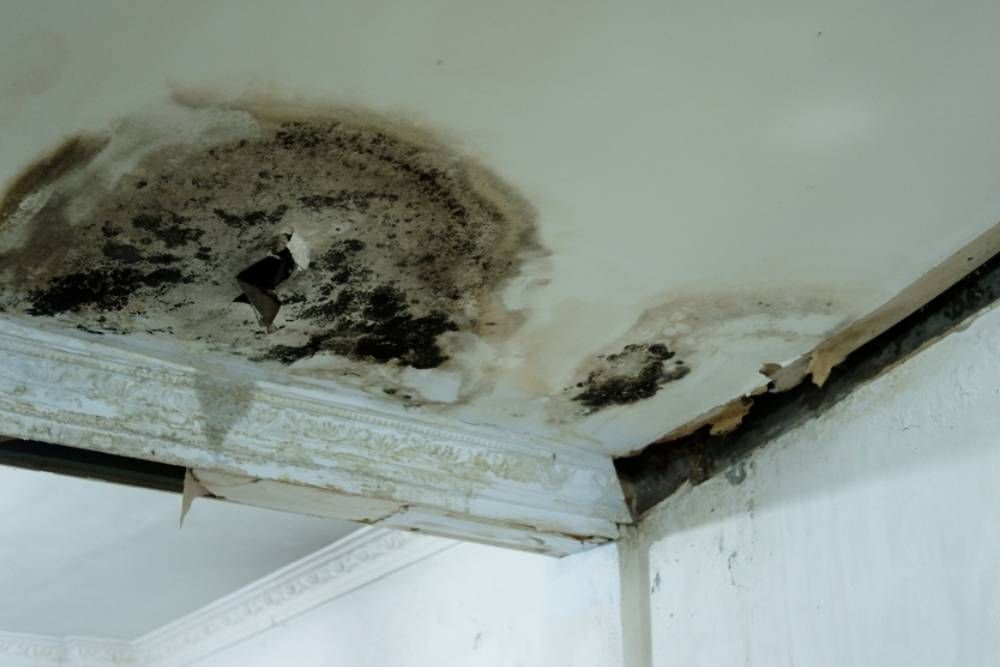
What I look for isn't cosmetic work — it's cosmetic work that's concentrated. A single drywall patch on the ceiling directly under an upstairs bathroom. New flooring in one bedroom and original flooring everywhere else. Fresh caulk run heavy at the base of a tub surround. A recently painted section of foundation wall at one corner of the house. Ceiling texture that doesn't match from one room to the next.
None of that is a defect. All of it tells you where to point the moisture meter and the thermal camera. Water leaves a map, and cosmetic repairs are usually drawn right on top of it. The tell isn't that someone made a repair. It's that someone made a repair and nobody can tell you what they were repairing.
3. Improvements nobody pulled a permit for
Converted garages, enclosed patios, added bathrooms, a fourth bedroom that used to be a den. On a wholesale deal these usually show up as square footage you're paying for.
The problem is twofold. First, the work is frequently substandard in the ways that matter and invisible in the ways that don't — a bathroom added without a properly vented drain, a converted garage with no insulation and a single 15-amp circuit feeding the whole space, a patio enclosure sitting on a slab that was never meant to carry a wall.
Second, unpermitted space is a financing and resale problem that follows the house. Your appraiser may not count it. Your buyer's lender may not count it. A city that finds out about it can require it to be brought up to code or removed.
I'll report what I observe and what appears to have been added. I won't pull permit history — that's on you or your title company, and on a house with obvious additions it's worth the phone call before you're under contract.
4. Work that was done by "a guy"
Almost every off-market house has some amount of owner or handyman work in it. The question is how deep it goes.
The signs are consistent. In a panel: doubled-up conductors under a single lug, breakers that don't match the panel's listing, wire nuts and splices outside a box, a subpanel with the neutrals and grounds bonded together. In the plumbing: galvanized pipe transitioning straight to copper with no dielectric fitting, a flexible connector run where rigid pipe belongs. In the structure: joists notched or drilled through the middle, a header that's just a 2x4, deck posts notched at the beam.
Any one of these is a repair. A pattern of them is a disclosure about everything you can't see — the work behind the drywall, under the slab, in the attic insulation.
Recommend evaluation and repair by a licensed electrician or licensed plumber, and get the number before you close, not after.
5. A deal structured so that you can't actually inspect it
This is the biggest one, and it's the one investors talk themselves out of.
The pattern: a short option period or none at all, access that's hard to schedule, a tenant who can't be disturbed, an assignment contract where the person selling you the deal has never been inside the house, and steady pressure that three other buyers are waiting behind you.
Some of that is just how wholesale works, and an experienced buyer can price around it. But understand what you're accepting. Restricted access means an inspection that's part guesswork. A locked room is a room that goes in the report as not inspected. A tenant-occupied house means I can't see the floor, the walls behind the furniture, or the back of a single closet. No attic access means no look at the framing, the ducts or the insulation.
The discount on an off-market deal is supposed to compensate you for condition risk. When the deal is also structured so you can't measure that risk, you're not getting a discount — you're getting a bet.
If you can only fix one thing on this list, fix this one. Buy the access. An extra two days and a full inspection is the cheapest money you'll spend on the property.
The short version
Off-market deals aren't worse than retail deals. They're just less documented. The seller isn't making disclosures, the wholesaler often hasn't been inside, and the house has no MLS history to contradict what you're being told.
That puts the entire burden of finding out what you're buying on one visit. Make that visit count: get the utilities on, get full access, get into the attic and the crawlspace, and get somebody in there who's going to write down what they actually found.
SFR Inspections performs pre-purchase inspections for investors buying residential property. If you're working a deal on a tight option period, call early — we'll tell you straight whether we can get you what you need in the time you have.
Social Connection